 Benjamin VnukSave this storySave this story
The best products for hair breakage have one common goal: keeping vulnerable strands from reaching their breaking point. And there's a lot working against them. Bleach, color, hot tools, UV exposure, aggressive brushing, and even the standard cycle of washing and drying can gradually chip away at hair's strength. “Hair breakage is the physical failure of the hair fiber,” says Cincinnati-based cosmetic chemist Kelly Dobos. And in many cases, “breakage is the result of accumulated damage,” rather than one particularly rough blowout or salon appointment.
A little hair anatomy helps explain what's happening. “The cuticle, which forms the protective outer layer, shields the cortex underneath, where most of the fiber's strength resides,” Dobos says. When that exterior layer wears down, the cortex becomes increasingly defenseless. At the same time, “hair fibers experience repeated cycles of stretching from combing, brushing, washing, and drying throughout their lifetime,” she adds. Eventually, small defects can build up until a strand can no longer withstand the stress—and, well, snap. Chemical processing and heat can further weaken the structural elements that give hair its strength.
Our Top Products for Hair Breakage
- Best Overall: K18 Molecular Repair Hair Oil, $65
- Best for Chemical Damage: Olaplex No. 3 Plus Complete Repair Treatment, $34
- Best for Mechanical Damage: Pantene Miracle Rescue Deep Conditioner, $14
- Best for Mature Hair: Oribe Hair Alchemy Fortifying Treatment Serum, $66
The good news: The right products can minimize damage while keeping stressed-out strands conditioned, flexible, and better equipped to handle everything you put them through. Some ingredients tackle that damage from the inside, while others focus on protecting the surface. Bond-builders, for their part, can restore “the integrity of the hair cortex,” says Los Angeles-based cosmetic chemist Amanda Lam, while “conditioning agents and oils work on the outer cuticle” to smooth and soften strands. In other words, preventing breakage isn't about relying on one miracle ingredient—it's about reinforcing weakened hair while minimizing the everyday friction and damage that can push it past its breaking point. Here’s what to add to your routine.
Frequently Asked Questions
- Does hair breakage mean I have broken bonds?
- What’s the difference between bond builders, proteins, conditioners, and oils?
- Which ingredients actually strengthen hair versus simply making it feel softer?
- How should you treat breakage in curly or coily hair?
- Meet the experts
- How we test and review products
- Our staff and testers
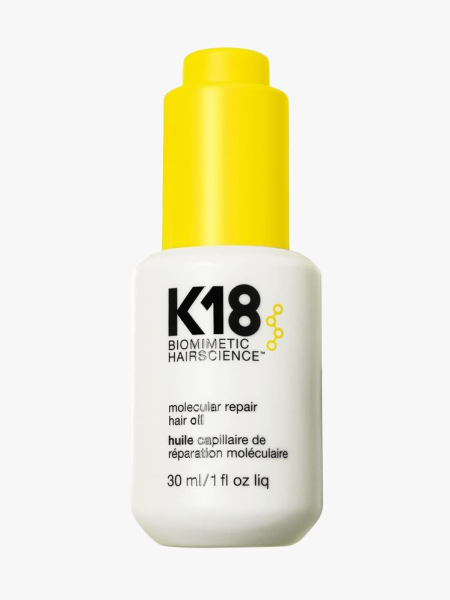
Best Overall: K18 Molecular Repair Hair Oil
 Save to wishlist
K18
Molecular Repair Hair Oil
Amazon
Sephora
Why it's worth it: K18's Molecular Repair Hair Oil takes the reparative technology made famous by the brand’s Best of Beauty Award-winning Leave-In Molecular Repair Hair Mask and bottles it into a styling product. At its core is the proprietary K18Peptide, a biomimetic peptide that mimics a sequence of amino acids found in hair keratin. Instead of simply coating roughed-up strands, it penetrates the hair fiber to reconnect polypeptide chains disrupted by bleach, color, chemical services, and heat—all of which can leave hair weaker and more prone to snapping. And speaking of heat, “it can withstand up to 450 degrees Fahrenheit,” says Lam, making it an especially handy line of defense against hot tool-induced breakage.
While the peptide works within the hair, ingredients like squalane, avocado oil, and sunflower oil address issues from the outside, lubricating and smoothing the cuticle to tame frizzy hair, reduce friction and flyaways, and prevent dullness. In other words, it pairs the instant polish you want from a hair oil with technology that addresses some of the damage behind breakage in the first place.
More to know
LargeChevron
- Key ingredients: K18Peptide, squalane, hemisqualane, avocado oil, sunflower oil
- Fragrance-free: no
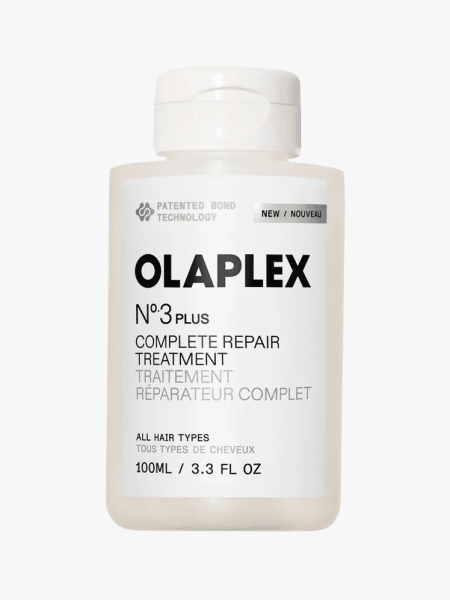
Best for Chemical Damage: Olaplex No. 3 Plus Complete Repair Treatment
 Save to wishlist
Olaplex
No. 3 Plus Complete Repair Treatment
Amazon
Nordstrom
Dermstore
Why it's worth it: For breakage caused by bleaching, coloring, or chemical straightening in particular, Dobos considers the Olaplex No. 3 Plus Complete Repair Treatment a standout. “I was introduced to Olaplex by my hairstylist shortly after the brand launched, and I've been a devotee of No. 3 ever since for my color-treated hair,” she says. That makes sense considering what repeated coloring can do to strands: Chemical processing can weaken the hair’s internal structure, leaving it more brittle and prone to breakage. Rather than relying solely on conditioning ingredients to make that damage feel less obvious, No. 3’s bond-building technology is designed to fortify compromised hair fibers—one reason Dobos says she was intrigued by Olaplex from a professional perspective.
At the heart of the formula is Olaplex's signature bond-repair ingredient, bis-aminopropyl diglycol dimaleate. “The patented ingredient works by reconnecting broken disulfide bonds on a molecular level by essentially inserting a synthetic patch where a natural disulfide bond used to be,” says Sherry Backman, a cosmetic chemist based in Brattleboro, Vermont. Translation: It reinforces the hair's internal structure, making delicate strands stronger and less prone to snapping. The updated formula also gives the hair's surface some extra attention with Olaplex's cationic technology, which adheres to damaged areas of the hair cuticle to smooth and condition. “I've also been impressed by the updated formula, which works with less processing time, making it much easier to fit into my routine,” Dobos says. That means just three minutes versus the original's 10—a pretty compelling upgrade when your hair needs repair but your shower schedule doesn't have time for a whole production.
Tester feedback from content director Sophia Panych
LargeChevron
“I'm one of those obnoxious people who wait to watch viral TV shows months, even years, after the buzz dies down. Sometimes all the hype has the opposite effect on me, which is exactly what happened with Olaplex. I'm a bit embarrassed to admit that, as a beauty editor for nearly two decades, I've never tried the brand's No.3—especially since my fine, fried, highlighted hair exhibits the exact kind of damage the formula claims to address. I tried No.3 Plus for the first time and was amazed at how silky it made my hair, both in the shower and while blow-drying.
My hair is comically long right now. I'm in desperate need of a haircut, but I'm also cheap and have been putting off my next cut and color as long as possible. That means every blow-dry is a battle to get the mid-lengths smooth and snaggle-free. After using No. 3 Plus, I needed significantly less effort to blow-dry my hair (i.e., less ripping through it with my brush), and I didn't need to go over it with a flat iron to get the silky sheen I like (I really hope my hairstylist isn't reading this right now). It's hard to tell if my hair is stronger than before, as I think I need to use it regularly and over a couple of months to see those types of results.
I will definitely be adding No.3 Plus to my hair-care routine from now on, on days I have a little more time to spend in the shower. For someone who is lazy with their hair and always late, the extra step, even though it's now only three minutes, may be hard to squeeze in during the work week. But over the weekend, though, sure thing.” —Sophya Panych, content director
Tester feedback from senior staff writer Elizabeth Gullino
LargeChevron
“It’s probably hard to believe that I’ve never used Olaplex No.3 before, given that Allure previously called it the ‘crown jewel’ of the brand, but it’s true. While the original formula claims to ‘reverse damage,’ I wouldn’t say my hair is necessarily in need of intense repair. I don’t color it (and never have), and I use hot tools sparingly, normally opting to let my hair air-dry instead of firing up a blow-dryer. I used both the old and new No.3 the same way—I covered my damp-ish hair from root to tip, put it up in a claw clip while I exfoliated and shaved in the shower, and let my hair air-dry after letting it sit in my Crown Affair hair towel. They were each left on for about 10 minutes total. After using the original formula, my hair dried into a sad, straw-like texture. I didn’t feel that my hair was left looking healthier, and I was not impressed. I also was not excited about trying the reformulation if there was an opportunity for the same result. Thankfully, I was proven wrong. The new formula immediately made my hair feel much softer—this could be because I used more product the second time around. While I don’t think my hair felt stronger immediately, as the brand claims, I can see how using this more often could have a better effect. Consider me a new fan.” —Elizabeth Gullino, senior staff writer
More to know
LargeChevron
- Key ingredients: bis-aminopropyl digylcol dimaleate, acrylamidopropyltrimonium chloride/acrylamide copolymer, glutamic acid, crambe abyssinica seed oil, avocado oil, and sunflower seed oil
- Fragrance-free: no
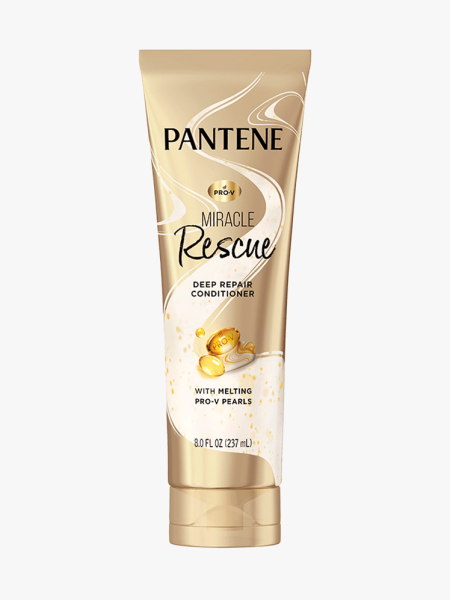
Best for Mechanical Damage: Pantene Miracle Rescue Deep Conditioner
 Save to wishlist
Pantene
Miracle Rescue Deep Conditioner
Amazon
Why it's worth it: Mechanical damage sounds technical, but chances are you're inflicting a little of it on your hair every day: aggressive brushing, yanking through tangles, rough towel-drying, and even the friction from styling can wear away at the cuticle and eventually contribute to breakage. Dobos likes Pantene’s Miracle Rescue Deep Conditioner for getting ahead of it. “Preventing damage is often just as important as repairing it,” she says, noting that the formula pairs “traditional and highly effective conditioning ingredients with a silicone that smooths the cuticle.” That silicone is bis-aminopropyl dimethicone, which latches onto damaged areas of the hair to smooth the cuticle and reduce friction—which is particularly helpful when you're brushing or detangling, when weakened strands are more likely to snap.
Conditioning agents add slip, making knots easier to work through, while fatty alcohols soften and lubricate strands. Panthenol (a.k.a. pro-vitamin B5) helps hair retain moisture and improves its flexibility. Better yet: It works in just 60 seconds, making it an easy way to give your hair a little extra insurance against everyday tugging, pulling, and brushing.
More to know
LargeChevron
- Key ingredients: bis-aminopropyl dimethicone, fatty alcohols, panthenol
- Fragrance-free: no
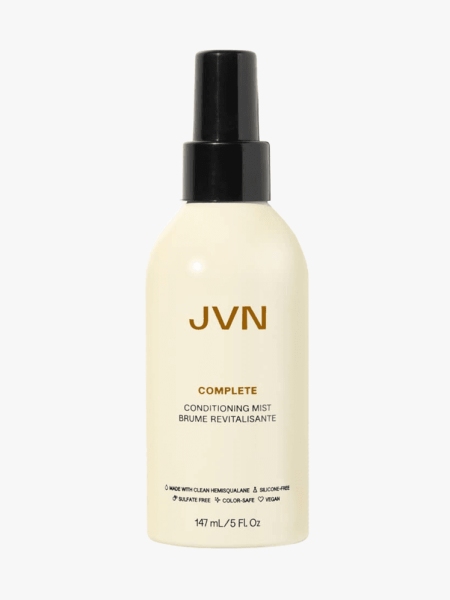
Best for UV Damage: JVN Complete Leave-In Conditioning Mist
 Save to wishlist
JVN
Complete Leave-In Conditioning Mist
Amazon
Nordstrom
Ulta Beauty
Why it's worth it: Sunscreen may have your skin covered, but your hair could use some UV backup, too. “Environmental damage is cumulative,” says Backman, who explains that UV exposure can oxidize hair pigments and contribute to deterioration of the fiber, while wind, low humidity, and everyday weather can ramp up dryness, roughness, and friction.
JVN’s Complete Leave-In Conditioning Mist takes a multifaceted approach. One distinction is the formula’s black spruce (Picea mariana) bark extract, an antioxidant-rich ingredient “that absorbs UV radiation, prevents oxidation of hair pigments, and inhibits free radicals associated with discoloration,” she says. But UV protection is only part of the breakage-prevention equation. Squalane, panthenol, glycerin, sodium hyaluronate, tremella mushroom extract, and vitamin E add another layer of conditioning, moisture retention, and antioxidant support. “Once hair becomes dry and weathered, increased friction can make an already compromised fiber even easier to break,” Backman says.
While the mist provides heat protection up to 450 degrees Fahrenheit, there is one important caveat: Backman says she hasn't found evidence that it reduces UV-induced breakage by a specific amount. For that reason, she considers it “a very good environmental-protecting and breakage-preventing leave-in conditioner, especially for dyed hair, rather than a treatment for severe existing structural damage.”
More to know
LargeChevron
- Key ingredients: black spruce bark extract, squalane, panthenol, glycerin, sodium hyaluronate, tremella mushroom extract, vitamin E
- Fragrance-free: no
Best for Dry Hair: SheaMoisture Amla Oil Bond Repair Masque
 Save to wishlist
SheaMoisture
Amla Oil Bond Repair Masque
Amazon
Ulta Beauty
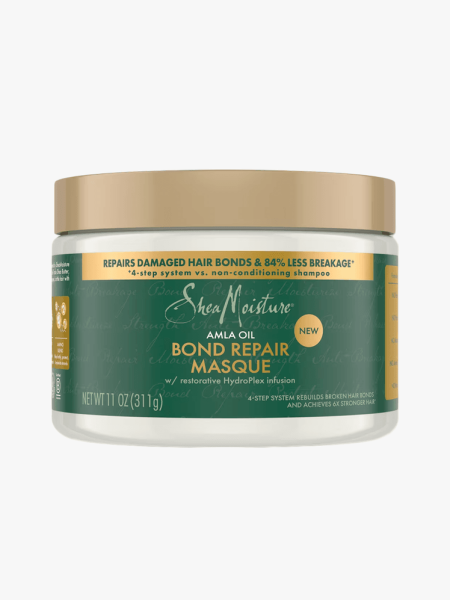
Why it's worth it: When hair is dry and breaking, simply piling on moisture is only half the assignment. “Dryness and structural damage aren't quite the same problem,” says Backman. “Humectants and emollients can make hair more flexible and lubricated, but if the fiber itself has been compromised, I also want ingredients that can reinforce it.” SheaMoisture’s Amla Oil Bond Repair Masque checks both boxes.
Its proprietary HydroPlex Infusion contains hydroxypropylgluconamide and hydroxypropylammonium gluconate, a duo that's more than just buzzy “bond-repair” marketing: Studies describe the combination as strengthening hair fibers, though exactly how it does so hasn't been fully established, Backman says. So, unlike Olaplex's proprietary molecule we wouldn't claim it specifically reconnects broken disulfide bonds—but there's legitimate fiber-strengthening science behind the formula. The hair mask also contains amino acids, including serine, arginine, histidine, and glutamic acid, to further support its damaged-hair credentials.
As for dryness? SheaMoisture didn't exactly skimp. Shea butter, sunflower and coconut oils, glycerin, and amla (an antioxidant-rich fruit traditionally used in Ayurvedic hair oils) soften thirsty lengths and add plenty of slip, making tangles easier to work through—and minimizing the breakage-inducing friction that comes with them. “It addresses both sides of dry, damaged hair,” Backman says, pairing a rich conditioning system that restores “slip, softness, and flexibility” with strengthening ingredients aimed at the compromised fiber. The richness is also one of its potential drawbacks: “Someone with very fine or easily weighed-down hair may find it too heavy,” she says. And keep your expectations grounded—even a justifiably strengthening formula can't turn back the clock completely. As Backman puts it, no bond-repair product can return severely damaged hair to a truly virgin state.
More to know
LargeChevron
- Key ingredients: HydroPlex (hydroxypropylgluconamide, hydroxypropylammonium gluconate), serine, arginine, histidine, glutamic acid, shea butter, coconut and sunflower oils, glycerin, amla
- Fragrance-free: no
Best for Mature Hair: Oribe Hair Alchemy Fortifying Treatment Serum
 Save to wishlist
Oribe
Hair Alchemy Fortifying Treatment Serum
Amazon
Nordstrom
Dermstore
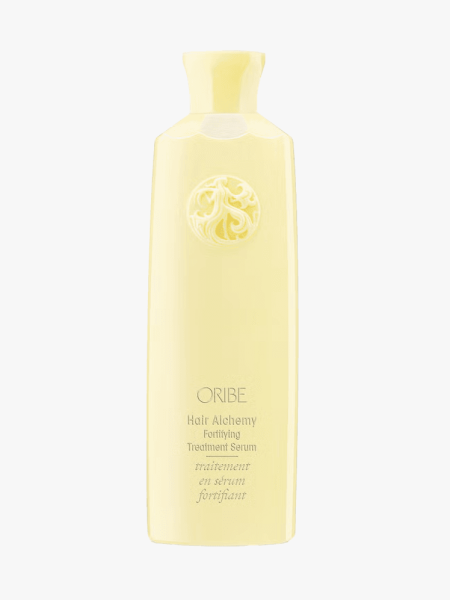
Why it's worth it: As hair matures, individual strands can become finer, drier, and more fragile, so everyday brushing, blow-drying, and styling can take a greater toll than they used to. “A serum like Oribe’s Hair Alchemy Fortifying Treatment Serum can shield and preserve aging hair,” says Backman. The lightweight leave-in reinforces aging strands without the weight of a heavy mask: Hydrolyzed rice and vegetable proteins strengthen the hair fiber, ceramides support the hair's protective lipid barrier, and dimethicone and conditioning polymers lubricate the cuticle to reduce friction (which can cause vulnerable strands to snap during brushing and styling). Panthenol, sodium PCA, and multiple forms of hyaluronic acid keep strands hydrated and flexible, while chia seed and fermented bamboo leaf get to work deeper within the hair, helping form a “scaffold” around each strand.
Backman also likes that the serum provides heat protection up to 450 degrees Fahrenheit, since “preventing additional damage is particularly important when the individual fibers are already becoming more vulnerable.” The numbers are impressive, but there's some fine print worth flagging: Oribe reports three times less breakage after one use when the serum is paired with its Strengthening Masque, while the claims of 133% stronger hair and 2.9 times more elasticity come from using the Shampoo, Conditioner, and Serum together for five washes. In other words, “the strongest numerical results aren't from the serum used entirely by itself,” says Backman. Though getting those headline-worthy results requires committing to multiple products, which can make this a pretty pricey routine to maintain, fans of Oribe's luxe formulas and signature scent may still find the strengthening results make the splurge worth it.
And one last distinction is worth making, particularly for mature hair. “With aging hair, I think it's especially important to distinguish hair loss from hair breakage,” Backman says. “A cosmetic serum that isn't acting like a drug can't reverse follicular miniaturization or treat an underlying cause of thinning, but it can help hold on to the lengths you have.”
More to know
LargeChevron
- Key ingredients: hydrolyzed rice, vegetable protein, ceramides, dimethicone, conditioning polymers, panthenol, sodium PCA, hyaluronic acid, chia seed, fermented bamboo leaf, and plant protein
- Fragrance-free:
Frequently Asked Questions
Does hair breakage mean I have broken bonds?
Hair breakage doesn't automatically mean you have “broken bonds,” at least not in the way the term is commonly used in hair-care marketing. “You can define hair breakage as the result of the hair fiber becoming weaker than the forces being placed on it,” says Backman. That weakening can come from chemical treatments, repeated heat styling, UV exposure, brushing, tight hairstyles, rough towel-drying, certain health conditions, or simply the cumulative weathering that hair experiences over time.
Hair itself is a complex structure: Keratin proteins are organized by strong disulfide bonds as well as weaker hydrogen bonds, ionic interactions, and other forces. While damage can involve disruption of these bonds, Backman says it can also involve “loss of cuticle, protein erosion, lipid loss, increased porosity, and the development of tiny cracks and defects in the fiber.” In other words, a strand can eventually snap simply because its protective cuticle has gradually worn away and left the cortex underneath more vulnerable.
What’s the difference between bond builders, proteins, conditioners, and oils?
Bond-building ingredients work within the hair fiber, reinforcing damaged areas or improving how strands handle stress when they're bent, stretched, or brushed. “The key distinction is that these technologies work within the hair fiber rather than simply coating the surface,” says Dobos. Proteins and peptides can strengthen damaged hair, too, by depositing onto the cuticle or interacting with compromised areas to fill microscopic defects and improve resistance to breakage. The categories aren't always clear-cut, though: “Some newer peptide technologies blur the line between proteins and bond builders,” Dobos says, and not every protein qualifies as a true bond-building system.
Conditioners and oils generally do more of their heavy lifting at the surface, smoothing the cuticle, adding lubrication, and reducing friction. That might sound less hi-tech, but don't underestimate a deep-conditioning treatment: “Hair breakage often occurs when fibers snag and experience excessive mechanical stress during brushing, combing, and styling,” Dobos says. By adding slip and making tangles easier to work through, conditioning agents, silicones, and oils can prevent strands from snapping without changing their internal structure. Ultimately, there isn't a single “best” category—the most effective formulas often combine strategies to support the fiber while protecting its surface from everyday wear and tear that can lead to breakage.
Which ingredients actually strengthen hair versus simply making it feel softer?
“There is an important distinction between making damaged hair stronger and making damaged hair feel better,” says Backman. Bond-building technologies, certain hydrolyzed proteins and peptides, and some polymeric treatments can actually improve a strand's resistance to breakage or reinforce damaged areas of the hair fiber. These are the ingredients to look toward when you're talking about strengthening rather than simply achieving softer, smoother-feeling hair.
That doesn't make conditioning ingredients any less important for preventing breakage, though. Silicones and conditioners such as amodimethicone, dimethicone, behentrimonium methosulfate, and cetrimonium chloride can “dramatically reduce fiber-to-fiber friction and combing force,” Backman says. Translation: If your brush glides through with less resistance, you're putting less stress on already-fragile strands. Silicones—and some silicone alternatives like squalane—can also form a super-thin lubricating film that reduces friction and protects hair during brushing and heat styling. “This is a legitimate damage-prevention mechanism,” Backman says, even if it isn't repairing bonds.
How should you treat breakage in curly or coily hair?
Curly and coily hair may require a little extra care to prevent breakage. “Every bend in the fiber creates another potential stress point,” says Backman, noting that tightly coiled hair can be especially susceptible to mechanical damage. Natural scalp oils also have a harder time traveling down a curved strand, which can leave lengths and ends drier and more prone to snapping. For curls and coils, Backman recommends putting extra emphasis on lubrication, conditioning, and gentle detangling, looking for fatty alcohols, conditioners, silicones or silicone alternatives, slip-enhancing polymers, and, depending on your hair's density and texture, oils and butters. And don't underestimate the power of slip: Shrinkage and tangling can make aggressive detangling particularly damaging, so “an effectively formulated detangler or conditioner may prevent more breakage in this situation than a bond-repair treatment used as a standalone,” she says.
Meet the experts
- Sherry Backman, a cosmetic chemist based in Brattleboro, Vermont
- Kelly Dobos, a cosmetic chemist based in Cincinnati
- Amanda Lam, a cosmetic chemist at Azelis based in Los Angeles
How we test and review products
We always enlist a range of testers for our makeup vertical, but hair-care products and tools are another story. While there are certainly products that can be used across different hair textures, lengths, curl patterns, thicknesses, colors (natural and unnatural), and needs, hair products are often created with specific consumers in mind. Many are created in order to address a concern (dandruff, breakage, brittleness) or to work most effectively for a specific hair type (4C curls, wavy hair, gray hair). You wouldn't want to pick up a purple shampoo that's only been reviewed by someone with, say, auburn hair, or a diffuser that's never been tested by anyone with curls—right?
For our review of the best products for hair breakage, we enlisted the help of multiple editors, writers, contributors, dermatologists, and hairstylists—all of whom want a deep cleanse without drying out their hair. Testers considered performance across four primary categories: efficacy, texture and experience, fragrance, and packaging. For more on what's involved in our reporting, check out our complete reviews process and methodology page.
Our staff and testers
A beauty product is a personal purchase. You might be searching for a face cream to address persistent dryness or a new nail product to add to your Sunday self-care routine; you may simply be browsing around for the latest launches to hit the hair market. No matter what you seek or your individual needs and concerns, Allure wants to ensure that you love anything we recommend in our stories. We believe that having a diverse team of writers and editors—in addition to the wide range of outside testers and industry experts we regularly call upon—is essential to reaching that goal.
After all, can we really say a skin-care product is the "best" for people over 50 if the only testers we've solicited opinions from folks who have yet to hit 30? Can we honestly deem a high-end diffuser worthy of your hard-earned cash if it's never been tested on curls? We're proud that our staff spans a wide range of ages, skin tones, hair textures, genders, and backgrounds, which means that we are able to fairly assess any beauty product that comes into the beauty closet.